
Atlanta, GA | October 8, 2025
Khalid Raheem Interview – New Afrikan Independence Party Founder & Former Black Panther
Evolution of Revolutionary Ideology
Gav’Rielle Sampson: How have your political beliefs and strategies changed from the time of being in the Black Panther Party into founding the Young New Afrikan Independence Party?
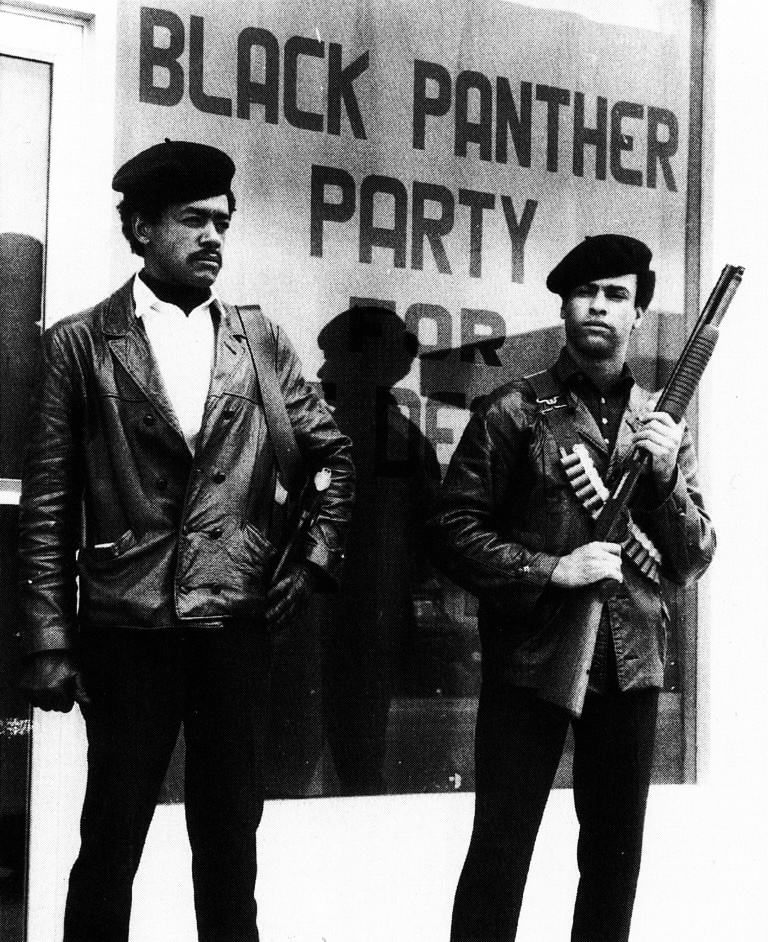
Khalid Raheem: Well first of all let’s talk about The Black Panther Party, let’s talk about The Black Panther Party’s political evolution. Because originally the Black Panther Party was primarily a Black nationalist organization. The Black Panther Party that you know was founded in October 1966. And, it was founded in response, not to just what was happening around the country and throughout the world, but it was founded as a direct response or reaction to the assassination of Malcolm X. This had occurred about a year before in February of 1965. So, the Black Panther Party in many ways was an extension of Malcolm X’s political philosophy and Malcolm X himself had went through various stages in terms of his political growth. Malcolm originally was what I would consider to be a fundamental Black nationalist, in some ways a reactionary Black nationalist. Then he became more involved with recognizing that it wasn’t just about Black people joining the Nation of Islam, it was about being able to connect the dots amongst the struggles of all Black people in the United States and around the world. So, at that point Malcom had moved from just being a Black nationalist to being more of a Pan-Africanist. Because he was able to connect the dots between what was happening throughout Black America to what was happening throughout the African diaspora. Especially throughout the continent of Africa. And then even later on Malcolm was able to expand this political philosophy to become more international, because now he was able to connect the dots even more. Not just to Black people in the Western Hemisphere or Black people throughout the African diaspora but all oppressed people around the world. The Vietnamese and their struggle, the Chinese and their struggle, the people in Cuba and their struggle, and other folks from all around the world.
Malcolm’s political development in many ways set the stage for the political development of the Black Panther Party. And, I had to say all that because I come from that tradition. So, the Black Panther Party basically Black nationalists, and then later on revolutionary nationalists. Revolutionary nationalists in the sense of understanding how important it was for Black people to embrace socialism as the most appropriate and probably the most pragmatic economic model and social model for our development. So that’s what the Black Panther Party was and then later on Huey Newton developed something that he called “intercommunalism.” So, we get Black nationalism, we get revolutionary nationalism, we get intercommunalism. Black nationalism was basically Black people coming together more of a direct response and reaction to the assassination of Malcolm. A reflection of what the Panther Party at that point saw as Malcolm’s political philosophy in terms of Black nationalism, Black self-reliance, community patrol, things of that nature. Later on, revolutionary nationalism which meant the incorporation of a socialist orientation as far as economic development and social structure. And then finally, what Huey Newton himself had put together that he called intercommunalism where Huey, but even though we all didn’t agree with it, but Huey basically had laid out a philosophy that said that “all nations, states, all countries were interrelated and that actually the ideas of a nation-state would kind of laissez, and that corporations have found a way to connect everyone, and it wasn’t so much about the nation-state, it was about corporations of the world, the multi-national corporations controlling it.” I’m just kind of generalizing; you would have to really do your own research on theories of intercommunalism.
So, for me, I’m basically where I always was in many ways, and that was a revolutionary nationalist, a Black nationalist, a Black revolutionary nationalist. Understanding that capitalism is not the best economic model even for freeing and liberating Black people when national Black community because we would still find ourselves in a trap. Like, still find ourselves having the same type of mentality that we had liberated ourselves from, in terms of like the oppressor, that mentality. That driving force for them was the acquisition of material stuff at any and all cost, which meant enslaving other human begins, which meant subjugating other human beings, which meant committing genocide on Indigenous people, which meant land theft, which meant a whole bunch of stuff. So, capitalism kind of generates that type of thinking and generates that type of hatred, because that type of thinking and that type of hate is needed in order to solidify the economic model of capitalism. So, we don’t want to go there, and so that’s where I am right now. My political philosophy is basically revolutionary Black nationalism. I would say that it has expanded, as it has for many of us who remembers the Black Panther Party, who later on came to embrace not just revolutionary Black nationalism but a revolutionary Black nationalism based upon how important it was for us to have our own land base and there in comes the philosophy of the Republic of New Afrika, which put a lot of emphasis on Black people being independent, being free, evident on land base, and they based their claim on the fact that the vast majority of Black people still live in the South. And, that the vast majority of Black people in this country came from the Southern part of the United States via the slave trade. We were concentrated in the South and built in the South in terms of South Carolina, North Carolina, New Orleans, so forth and so on. Then as I’m sure you know, there were the great migrations that occurred after the Civil War came to an end, after the end of World War I, and during and after the end of World War II. So, thats why we have a heavy concentration of Blacks who now live in the Midwest than they did before, than in the Western part of the country. But originally the vast majority of our people have in been enslaved were in the South because in the South the agricultural system was the basis for the Southern capital. So, we were the labor, and we were the capital, but we were the labor and so that’s where we were, we were down South.
There’s a combination of the Republic of New Afrika along with the Black Panther Party and that’s where I’m at today. And that’s really the political philosophy of the NAIP. The NAIP is basically pushing that line that we need to be free, we need to be liberated, and we need to be able to make a choice at some point in the struggle. We need to be able to have a plebiscite, and we need to be able to decide for ourselves, for Black people whether we want to remain part of the United States as it’s presently constituted, or do we want to have our own nation, or do we want to remain part of the U.S. so that do we have to have a new political relationship, an economic relationship? We can’t continue to go on with the relationship that we have right now considering the history that we all know.
The Black Panther Party vs. The Young New Afrikan Independence Party
Gav’Rielle Sampson: What was your goal or drive being in the Black Panther Party and how has that passed down to or changed your mission for the NAIP?
Khalid Raheem: That’s a great question! So, in the Black Panther Party, now keep in mind, when I joined the Black Panther Party, I was a teenager. I was still growing, I was still developing my world view, and I would say that as a member of the Black Panther Party many of us thought that revolution was just around the corner. We really did. We thought that we would be fighting, literally fighting, in the street, and some of us did, but we literally thought that we were fighting in the street as a mass of Black people, along with our allies you know, whites, brown, Indigenous folks. And we thought that at some point we would win and be successful in taking power and seizing power here within the United States and we would then go about the business of transforming the society. Into a society that was based upon principles of justice and equity and that was free of racism and white supremacy and capitalism. We wanted to replace the capitalist economic model with a socialist or more socialist oriented economic model as a way to directly attack and alleviate poverty and homelessness and things of that nature.
So, that was the thinking, and I still believe that! I don’t believe that revolution exists around the corner, I’ve lived long enough to see and to find out for myself that that was an error in thinking. So, I think that we still have to fight hard to gain a different society. I think we have to utilize the systems and institutions that exist but, we also have to have a game plan to create new systems and institutions as we seize power, and once we have been successful in actually winning power. We got to have a game plan, and we got to have an idea what type of society we want. It’s not just enough to be clear about what you’re fighting against, it’s really most important to have a real good conceptualization of what you’re fighting for. I think that’s where a lot of people get confused today. Young people and the older folks such as myself who were once upon a time young people. A lot of us, we became confused. We knew what we were fighting against, we were fighting against Jim Crow, we were fighting against police brutality, but many of us didn’t have a clear sense of what we should be fighting for. What this new society and new world would look like once we were able to get rid of Jim Crow, once we were able to dismantle Jim Crow. Once we were able to institute community control of the police, what would these new communities look like? That’s been a struggle over the years.
In terms of the NAIP, the NAIP we were able to create a political party based on the best ideals and examples of routes before us, such as the Black Panther Party, the Republic of New Afrika, the Student Nonviolent Coordinating Committee, Marcus Garvey’s group (UNIA) The Universal Negro Improvement Association. We were able to take the best ideals and concepts, and the best practices from all of those groups and make a conscious decision that we needed to have an independent Black radical party. We needed to have an independent Black radical political party. It wasn’t just enough to have an organization that would do community organizing, and do advocacy and protesting to demonstrate. We needed to have a political party that would challenge the system for the right to govern our people. So, that means that we would challenge not just the Republicans, we would challenge the Democratic party as well, because the Democratic party has failed the Black community. And I think that’s become very clear to a lot of people, especially in light of the reelection of Donald Trump. So, we wanted to create a radical militant revolutionary independent Black political party. There then is the creation of the N.A.I.P: The New Afrikan Independence Party.
Gav’Rielle Sampson: Can you point out some key ethical and structural similarities and differences between the two political parties?
Khalid Raheem: You mean between the Black Panther Party and the new Afrikan Independence Party? That’s a very good question! I think that for one thing we in the NAIP, I am the founder, I am the Chairman, but we don’t really get into like the personality cult type of thing. And when I say the “personality cult” yes, I am the founder, yes, I am the Chairman and I try to do the best that I can do but I have to be held accountable, and I am held accountable like everybody else in the NAIP. I’m not better than anyone, I’m not above anyone, I’m not beyond reproach, I’m not beyond criticism.
I think that with the Black Panther Party, at some point, not originally, but at some point, within the Black Panther Party we had leadership that became beyond reproach. It was like leaders who people thought should not be criticized. Or the leaders who themselves came to believe that they should not be criticized. That there were the opinions, its absolute. And I’m mainly speaking about Huey Newton and to some degree Eldridge Cleaver, because it was a so-called split within the Black Panther Party. It led to a lot of conflict, unfortunately some injury and some death. I can clearly say that I remember very well how disappointed I was with Huey Newton at first and then later on Eldridge Cleaver. But my group, some of my comrades, we sided more so with Eldridge Cleaver because of what he was saying at that time. He said that we had a right to defend ourselves, to protect ourselves because at that moment the Black Panther Party our offices were getting attacked almost weekly literally. Almost every week or every other week one of our offices was being subjected to police attack. This was happening all around the country, and Eldridge he was able to appeal to the members who thought that we need to take a stronger military position against the government and retaliate and fight back, the way that they were coming at us. And Huey, in being recently released from prison, he thought that perhaps we need to pull back a little bit and refocus our energy on developing the community and providing types of services that the people needed. Now, when I was younger, I thought Eldridge was taking us down the right track. As I got older, I realized that what Huey had proposed had made a lot more sense at that point. I still appreciated both Huey and Eldridge in terms of their leadership, but the problem with both is that at some point, originally with Huey, he just got caught up into the power thing. It became like a personality worship, and you couldn’t criticize Huey Newton. You couldn’t say anything against Huey Newton, and if you did you were looked upon as a traitor to the Black Panther Party. That was very problematic.
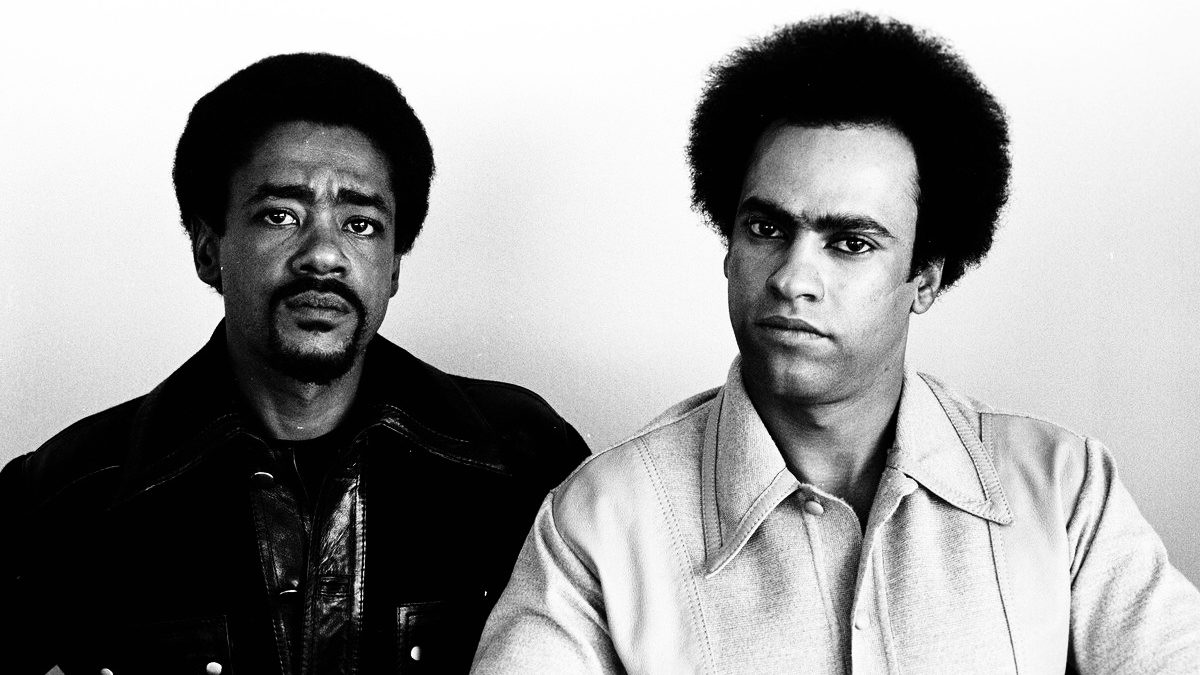
So, that’s one of the things in the NAIP we basically guarded against. I don’t want nobody worshipping me, my word is not the word of God, and my behaviors, and my attitudes, and my word is subject to review, critique, just like anyone else. I hope that you brothers and sisters on campus, I hope that you practice the same thing.
That doesn’t mean that you don’t respect their leadership, that doesn’t mean that you don’t follow orders or follow instructions. When I say follow orders I mean, keep in mind, the Black Panther Party in many ways we were a paramilitary organization. In many ways the Black Panther Party was a paramilitary group. We had structures we had like captains, lieutenants, we had ministers, and so if you look at the NAIP we have something very similar. Some of the similarities, we have chairs, we have co-chairs, we have ministers, I haven’t really gotten to the security party of the NAIP because that’s something that we all had agreed upon, that you guys didn’t need as a campus chapter, that’s not something that you want to get into, and it probably would cause a lot more problems for you anyway at this stage. But that’s something within the community that we do encourage. We do encourage self-defense, we do encourage community-defense, we do encourage members learning how to protect themselves. We think that’s very important, we don’t live in heaven, and we don’t live in paradise, we live on earth amongst human beings. We have to look out for ourselves; we got to protect each other.
So, those are some of the similarities and parallels between the structure of the Black Panther Party and the structure of the NAIP. The Black Panther Party held weekly political education classes. The NAIP, we for the first three years here, we did weekly political education classes as well. The Black Panther Party did a lot of community advocacy and organizing, and the NAIP believes in doing the same thing. We’ve done the same thing here in the Pittsburg region, and some other places as well. So, there are some similarities because again I’m an outgrowth of that particular era. It wasn’t just the Black Panther Party, it was all the other groups and organizations who were part of the Civil Rights Movement, the Black Power Movement, the Black Liberation Movement at that particular time.
Defining Black Liberation
Gav’Rielle Sampson: What would be your definition of Black liberation and how does it correlate in terms of the NAIP for you?
Khalid Raheem: That’s a very good question! Well first of all, let me go back and say something about how we look at our movement over the last 60 years or so. Nowadays most mainstream media, even independent, even like alternative media that may not be radical, may not be revolutionary, or may not understand the history. They lump everybody together under what? The Civil Rights Movement. I kind of laugh about it, I chuckle about it, but they take Dr. King, Rosa Parks, Malcolm X, Elijah Muhammad, Stokely Carmichael, the Black Panther Party, The Republic of New Afrika, Congress of Afrikan people. They take all of these groups and put them under the Civil Rights Movement, that’s completely misleading, it’s completely inaccurate. So, for me, this is what I teach when I’m teaching P.E. classes, I say we need to break it down. We have the Civil Rights Movement, we have the Black Power Movement, and then we have the Black Liberation Movement. Three different things. Do they overlap? Yes, they do. Do we have some people who play a role in all three phases? Yes, we do. But they are distinct because of their focus and the politics that were dominant at each and every point when these movements became permanent or they became essential to what was going on with Black people.
So, with the Civil Rights Movement, there’s a fight to dismantle Jim Crow, especially to dismantle the real harsh realities of Jim Crow that existed throughout the South, Jim Crow existed throughout the country. Up North Jim Crow existed where no you didn’t have segregated department stores and you didn’t have segregated water fountains, but Black children could not be in the same public swimming pool with white children. This is in places like Pittsburgh, Pennsylvania, so you had Jim Crow it was all around the country, but it was really really vicious and really pronounced throughout the South. So, you get the Civil Rights Movement, the Civil Rights Movement primary focus was to dismantle Jim Crow. Some people read that as the integration, but it was to dismantle Jim Crow. Then you get the transition from Civil Rights into Black Power. So, if you ever see some of the old videos, or if you read some books, you’ll see Martin Luther King, but you’ll also see Stokely Carmichael. You’ll see a young Dr. King in his 30s, but you’ll see a young Stokely Carmichael as a student, then later on in his early 20s. So, Stokely Carmichael was part of the Civil Rights Movement when he started out but eventually, he evolved, and for him it became, well it’s not about civil rights, it has to be about Black power. It’s about Black people having control, it’s about Black people having control over their communities. Having control over their businesses, their stores, their politics, but still within the framework of the United States. You get Stokely Carmichael and then later on you get the more radicalization of the group that he had been working with. That was SNCC, the Student Nonviolent Coordinating Committee. Like when people ask me about SNCC, I say well it depends on what SNCC were talking about. Because originally it was called the Student Nonviolent Coordinating Committee, but later on it was changed to the Student National Coordinating Committee because they had decided that nonviolence as a tactic might work in certain situations, but they asserted their right to practice self-defense. Because they were being influenced by, not by Dr. King so much anymore, they were being influenced by Malcolm X.
So, you get the Civil Rights Movement, the Black Power Movement. With the Black Power Movement, with the passage of certain Civil Rights bills, like the Civil Rights Bill of 1964, and then the Voting Rights Act of 1965, it created a lot of opportunities for Blacks who were in a position to work for the government, their local government, the federal government, to work in corporate America. So, it created all of these opportunities and then it creates some opportunities for Blacks to get more involved in electoral politics. So, you talk about the Voting Rights Act of 1965, it created a cycle of opportunities. You get an increase in the number of Black elected officials, you get an increase in the number of Black faces on television and in movies. You may find this hard to believe but I’m sure your parents or grandparents have told you these stories where, I mean you can turn on your television. It is very very rare to see a Black person on television. Some on television, the roles they were playing were usually roles of servitude, and if you went to a movie theatre it was even rarer to find a Black person being portrayed on the big screen. When they were being portrayed, they were being portrayed as butlers, as nannies, as maids… or slaves. Even when they featured a Black person in the movies, for example, who had some significant role, if it involved any type of conflict that Black character would always be the first person to die in the movie, always. So, those are the kinds of things that were taking place during what we call the Black Power era. You had more Black visibility, you had more Black elected officials, you had more Blacks having entrance into corporate America, so forth and so on.
Then, we get to the last phase which is Black Liberation. You get the founding of the Black Panther Party. You get the founding of the Republic of New Afrika. You get the transition of SNCC. You get the Congress of Afrikan People like Amiri Baraka. So, these groups were like nah it ain’t about civil rights, nah it’s just not about Black elected officials, that’s good but that’s not what’s it’s all about, it’s not just about having more Blacks in movies on TV. It’s about Black people being liberated, being able to express and practice self-determination and in a situation, in a case of the Republic of New Afrika they were like, we need to have our own nation, a real nation where we can govern ourselves. So those are three distinct things, Civil Rights, Black Power, and Black Liberation.
Revolutionary Leadership & Mentorship
Gav’Rielle Sampson: How does your role as a leader influence your approach in guiding the next generation, in relation to and past lessons and experiences you have had?
Khalid Raheem: I’d say that I’m very grateful for the people who took time to teach me and who took time to educate me. Despite all my shortcomings and my faults and despite at times my tendency to be reactionary, as a young kid. As a youth, they were patient enough to keep working with me and keep pushing me in a certain direction and to allow me to grow. Allow me to make mistakes but to be around to help me to recover from those mistakes and errors as well. They protected me, they gave me guidance, they gave me wisdom, they gave me a lot of love. I’m very thankful and I’m very grateful. I’m talking about brothers who recruited me into the Black Panther Party, the brothers who were political prisoners, we were all political prisoners together and I was the youngest in my crew. They spent a lot of time learning themselves, but they spent a lot of time teaching me. So, I’m very grateful and I’m very thankful. I think that’s so important today. I think those of us who are still living, who are still revolutionaries, we have to be willing to spend the time and be patient with the younger up and coming revolutionaries right after us.
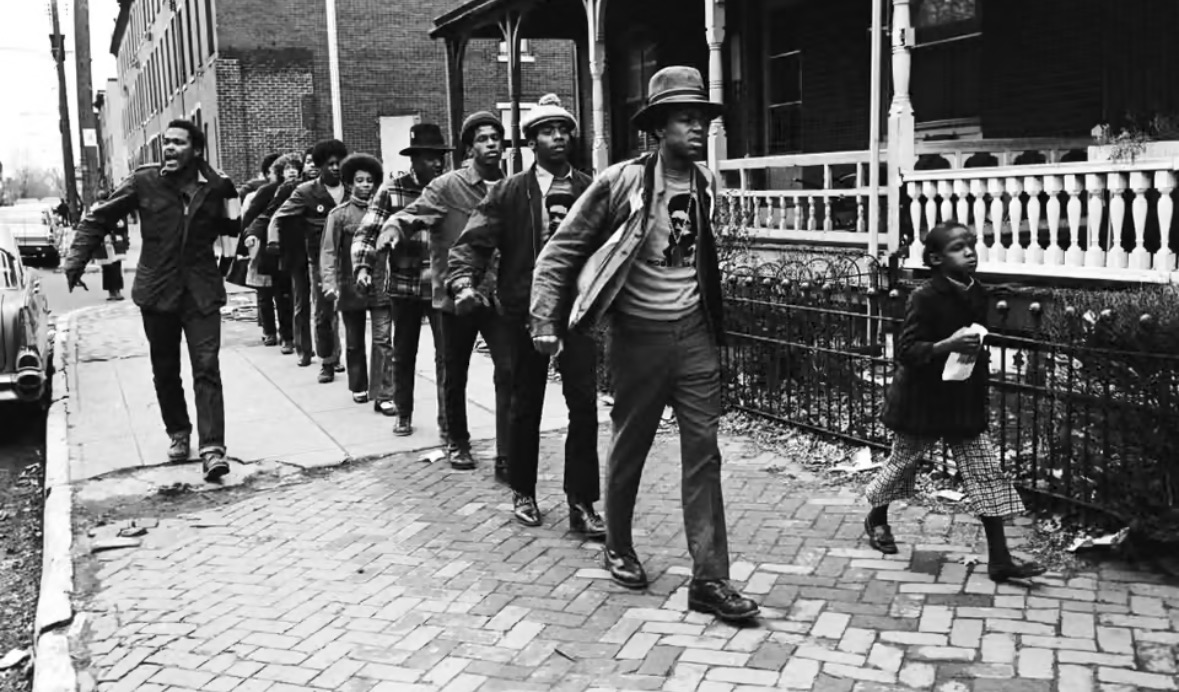
So, that’s the way I look at the development within our organization within our movement. We have to let people do what they do. Doesn’t mean we just throw them out there because for example you guys as a campus chapter. I believe you guys need a tremendous amount of community support. Especially now with the new administration, I’m talking about the White House Administration. And the attacks against, well we already know that the U.S. Supreme Court, they gutted affirmative action. Now the Trump administration is attacking D.E.I. So you guys need a tremendous amount of community support. One of the things that I’ve really been concerned about is about how you’re gonna be holding up in the Atlanta area. The student population is a very vulnerable population. It’s easy to attack the students. I’m sure you realized that in light of last years protest against the genocide in Gaza and the protests that erupted on campus and around the country. Now you have campus administrators who even though some may have been sympathetic, they become defensive because they’re afraid they’re gonna lose their jobs, they’re gonna lose funding for their apartment. Then you got others that never were all that concerned and now this is an opportunity for them to come down real hard on any student activism and protest. So, you guys are in a very precarious situation. It requires, I believe, for you to have as much community support as possible.
Khalid Raheem’s Literature
Dare to Struggle! Dare To Win! (1981-2020): A Personal Memior
Panthers That Make Salat: Memiors of incarceration, Survival and Resistance (1971-1981)
Toward A New Afrikan Revolution: Volume II: National Liberation and Social Revolution
Legacy & The Future of Black Liberation
Gav’Rielle Sampson: What is your reflection on the long-term impact of the Black Panther legacy into what future you see now for Black liberation?
Khalid Raheem: I’ll answer the last part first. I think that the Black Liberation Movement has taken a lot of blows over the last few decades or so. Notably, the dismantling of the Black Panther Party, because the Black Panther Party effectively came to an end in 1982. It was founded in 1966, it kind of closed its doors in 1982. We’ve had many groups who have called themselves the Black Panther Party but they really, sadly, they haven’t lived up to the principles, and the history, and the legacy of the Black Panther Party. I think the Black Panther Party is still highly respected amongst circles of both adults and especially youth who are conscious. I think most Black youth in this country, I think I’ve wrote about this once before, in my talks with Black youth. Well if you asked out of all the groups organizations; the Civil Rights, the Black Power, and the Black Liberation era, if you could have joined which one would you have joined? Almost every last one says the Black Panther Party. So, that says a lot right there. So, the legacy is still there. It still resonates with people, especially young people.
Unfortunately, people have tried to exploit it, not tried, they do, they do exploit the Black Panther Party legacy. So, that’s gonna continue to happen, we live in a society that is like that. Capitalism is an exploitative economic model. It believed in commodifying and making money off of anything. It commodifies man, especially it commodifies women, it commodifies your music, your dance, your dress, your talk, your culture, anything that it can commodify and make a few bucks off of that’s what capitalism does.
Unfortunately the same thing has happened with the history and the legacy of the Black Panther Party. But the Black Panther Party’s authenticity is something that can’t be duplicated. We didn’t write proposals and get, you know, millions and millions of dollars worth of grant money. We oftentimes we had regular jobs, for those of us who had a job, but we still had to do the work of the Black Panther Party. For some of us we gave up our education, our higher education, and we sacrificed that in order to serve the people and work within the community. It was a lot of that going on too. So the Panthers came from various backgrounds, you know, we were high school students, we were former gang members, we were college students, we were mothers and fathers who worked everyday, I mean it was a mixture, formerly incarcerated people, it was a mixture. We were strong. We were strong.
Make a one-time donation
Make a monthly donation
Make a yearly donation
Choose an amount
Or enter a custom amount
Your contribution is appreciated.
Your contribution is appreciated.
Your contribution is appreciated.
DonateDonate monthlyDonate yearly
 The New Afrikan Independence Party Official News Publication
Leave a comment