

Atlanta, GA | October 6, 2025
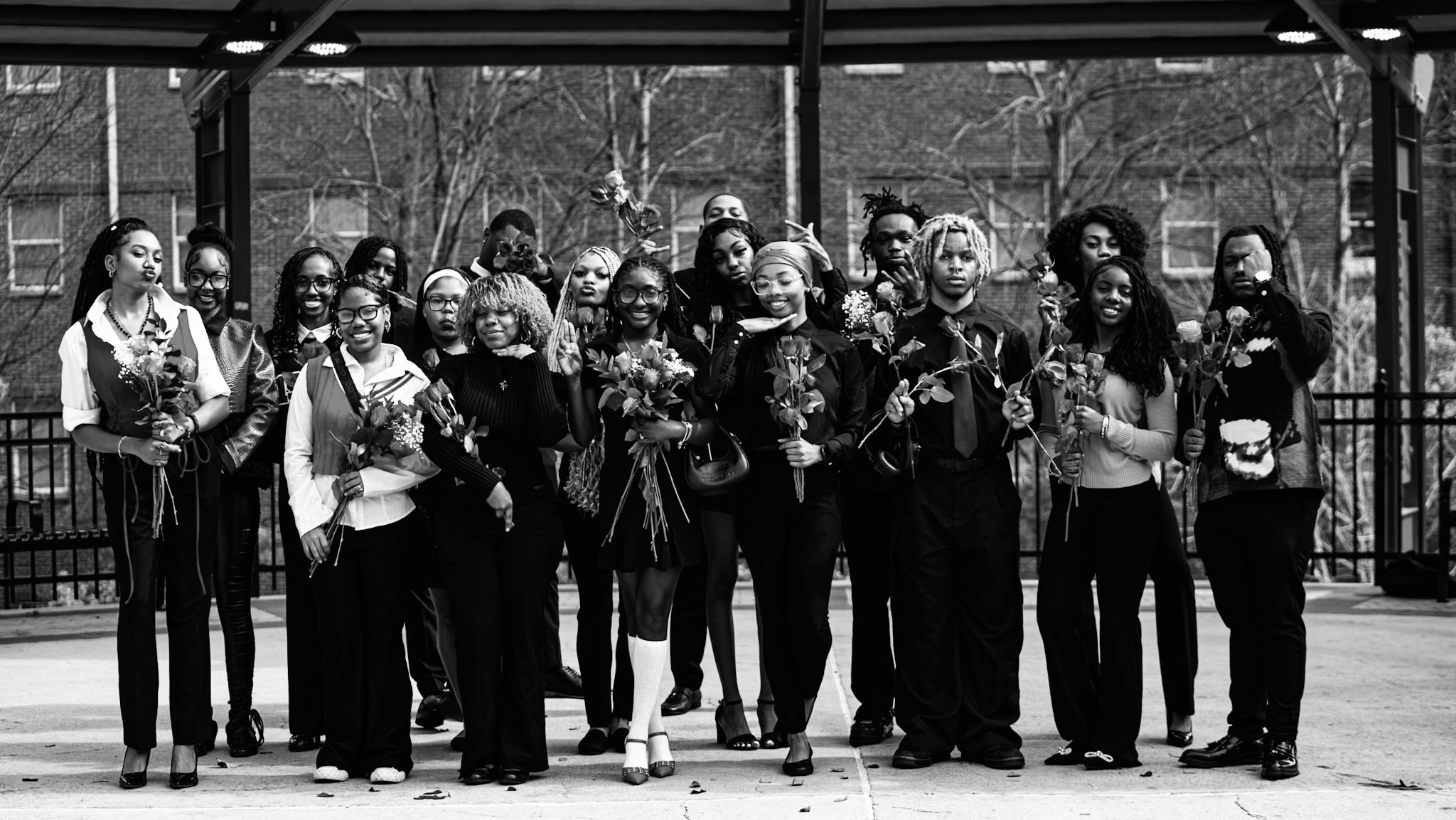
There has been an upcoming organization and political party, the Young New Afrikan Independence Party. Introduced on Clark Atlanta University’s campus in Atlanta, Georgia this had been brought on by a former Black Panther, Khalid Raheem. Students at the university seem to be in support of the organization’s values. This goes to show how HBCU students at Clark Atlanta University react towards Black activism during such a time for revolution, especially considering President Trump’s second administrative term and its targets on Black students.
Events led by the organization are bringing political awareness to the campus through its cause of Black enrichment, advancement, and education. The upbringing of this advancing organization from the Black Panther Party uplifts the Black community whilst in contrast through its means of delivery. There is an occurring theme of the group over the span of three years giving flowers to the kings and queens of the Atlanta University Center. From the organization, Roots of Royalty, inspired by giving out flowers to the university’s community, had received lots of recognition and engagement. This social affair has extended much support from Clark Atlanta University staff, educators, and students from across the Atlanta University Center.
“Shoutout to the ladies of @NAIP_CAU that are being trailblazers for Black women on campus. Truly an inspiration when you speak with them on all levels!! Can’t wait to do more with you all.”
The 6th Mister CAU, Ezekiel Stephens
Chair of the organization Selah Margarita Walton highlights in an interview that, “In terms of the events, I would say that we have to go back a few because these aren’t our first events. Roots of Royalty came from the event we did named, Black Men Deserve Flowers Too, and that’s just off the strength of our campus having a complete imbalance in terms of gender, so we wanted to honor all of our Black men.” The acknowledged event recently adapted a sequel, that being Black Men Deserve Flowers Two.
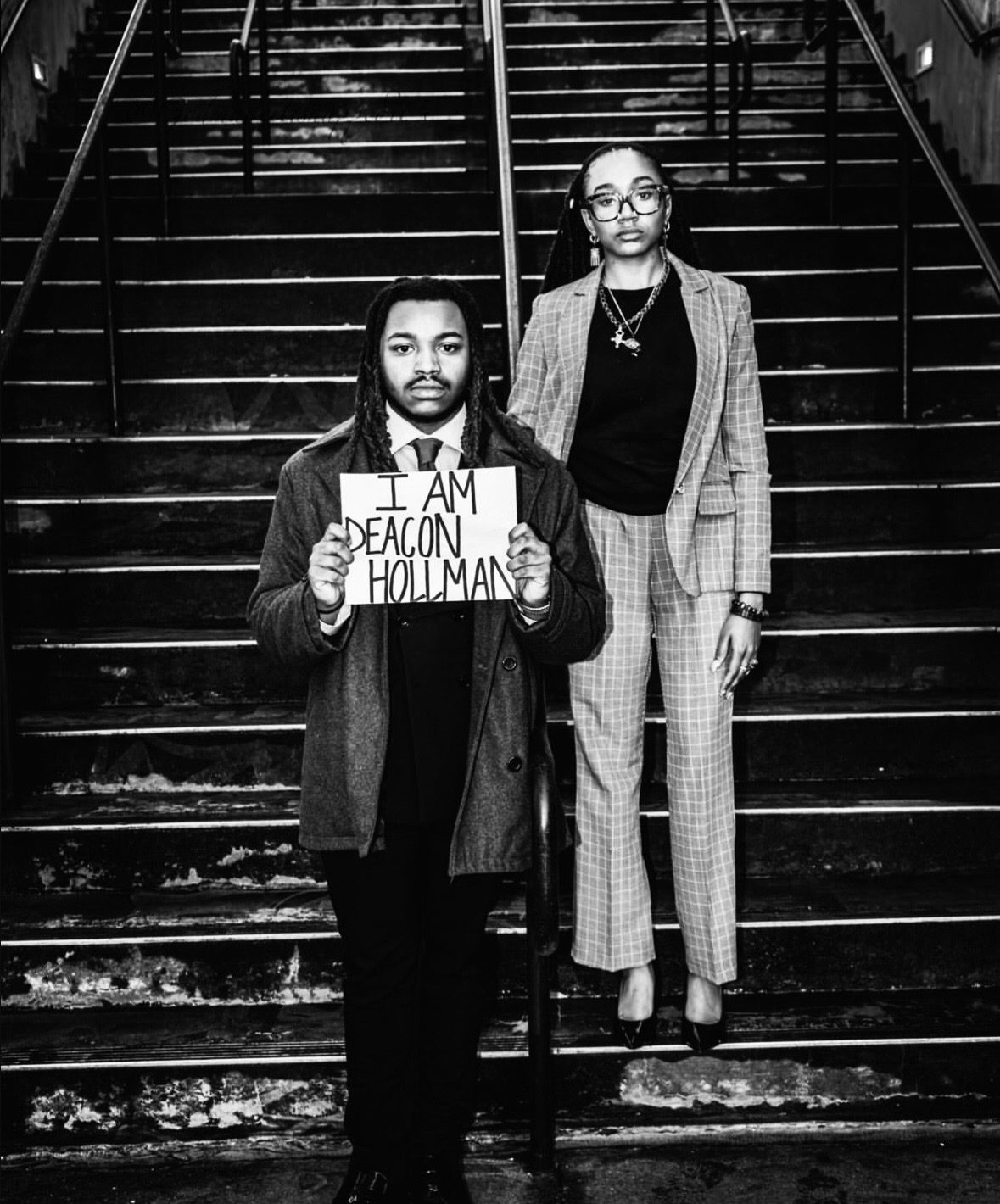
Following the organization’s progression and ideologies, a very political photoshoot led by the organization: I am… Photoshoot, had also gained the attention of many and has included various faces from around Clark Atlanta University, Spelman College, and Morehouse College campuses. This political party highlights the Black lives that have been lost to police brutality in America, in honor of Deacon Johnny Hollman who passed. In 2023, Atlanta church deacon Johnny Hollman encountered the Atlanta city police, ending in a lost life. When attempting to plead innocence of a traffic ticket, once Deacon Hollman agreed to sign a traffic ticket, Atlanta Police Department’s former Officer Kairan Kimbrough retaliated with physical force. Deacon Hollman was put onto the ground at the hands of former officer Kimbrough and repeatedly tased, all while being physically laid out. While Deacon Hollman repeats that he couldn’t breathe, Kimbrough repeatedly commands him to put his hands behind his back. This tragic encounter ultimately led to the passing of Atlanta Deacon Johnny Hollman.
In efforts to spread awareness and continue a fight for justice for Hollman’s family, the NAIP’s “I am… Photoshoot” included a community of Black college students acknowledging the lurking harms of police brutality. While bringing recognition to such a case of police brutality locally into and involving the University Center community, it was further broadened. There was an acknowledgement to those whose names are said and not said, these including, George Floyd, Celestine Chaney, Emmitt Till, Breonna Taylor, Sonya Massey, Tamir Rice, and Sandra Bland. Chairwoman of the organization, Selah Margarita Walton, speaks to this cause of recent impactful events saying that,
“…This idea of political engagement and awareness goes beyond and making sure that people know the work that Black college students are doing, considering our current political climate.”
This theme can be caught on as the groups last event of the spring semester, hosting a Political Education Class on the Grass, serving to educate the community on the representation students have on campus, at the local level, state level, and federally.
In conversation with former Black Panther, Khalid Raheem, who serves as the Founder and Chair of the Young New Afrikan Independence Party, he answers directly to the importance of revolutionary ideology and leadership. Highlighting the party’s mission, Raheem quotes,
“We need to have a political party that will challenge the system for the right to govern our people. So, that means that we would challenge not just the Republicans, we would challenge the Democratic party as well, because the Democratic party has failed the Black community. And I think that’s become very clear to a lot of people, especially in light of the reelection of Donald Trump. So, we wanted to create a radical militant revolutionary independent Black political party. There then is the creation of the N.A.I.P: The New Afrikan Independence Party.”
Andrew Moore & Selah Margarita Walton Interview – NAIP Chairs
Political Engagement & Motive
Gav’Rielle Sampson: What would you say your motive has been behind these events your organization has been pushing out. This is in regard to events such as Roots of Royalty and the I am Photoshoot which has gained lots of inclusion and support from all around the Atlanta University Center.
Andrew Moore: I would say, personally, my motivation for the events came from just being a creative mind. I kind of want to do something that I’ve seen nobody else do, to really give NAIP that flair, and then also make it our own. And then two, I know with the kind of work that we’re doing, it has to be publicized more. Because I feel like a lot of people in our generation, it’s something easy to just scroll by and look at. But the more you put in their face and the more you make it something that’s good looking to the eye and great to hear, people will start to take in more, so that was just the goal with it.
Selah Margarita Walton: Well from young, my upbringing involved a lot of Black politics, so I was always aware of what this country has done to Black people. So, I honestly think I was prepped for this mission. My parents instilled in me that it’s our duty to make the change than rather just talk about the change. So, when the opportunity was presented to be the Chairwoman of the N.A.I.P, the New Afrikan Independence Party, I was more than grateful, more than appreciative to be able to have a role to do exactly what I was set to do. And, In terms of the events, I would say that we have to go back a few because these aren’t our first events. Roots of Royalty came from the event we did named, Black Men Deserve Flowers Too, and that’s just off the strength of our campus having a complete imbalance in terms of gender, so we wanted to honor all of our Black men. As well as the I am Photoshoot, we honored all of the people who unfortunately lost their lives due to police brutality. So, this idea of political engagement and awareness goes beyond making sure that people know the work that Black college students are doing, considering our current political climate.
Collaborations & Inspirations
Gav’Rielle Sampson: As you are partnered with a former Black Panther to fulfill the mission of the Young New Afrikan Independence Party, what are some other political inspirations and ideas that you implement into the NAIP as you make it your own?
Andrew Moore: I would say something that I like to implement, personally, one big thing about learning about the history of the Black Panther Party was the implementation of giving women power early. That’s kind of why the idea of Chairman and Chairwoman became a thing on this campus so early. Even though we’re not all the way a political party, just to get that into the works that women are just as powerful as men and that women also need their own governing without them, because they understand a different realm of problems, and vice versa the other side. I would say some other people that I take account of like Malcolm X for sure, MLK, and then I’ll even say just like my own personal things that I hold close to me, that I understand about our community is stuff that I think about.
Selah Margarita Walton: Honestly now I would say we try to collaborate with a lot of different organizations to be able to connect. It’s more like a take and give, what can we provide and what can you provide? Because we’re clear on our political awareness, but we want it to be beyond just Political Science students or just the political department. We want to make sure that our HBCU campus knows that we not only are aware, but we need to spread this message. So, in terms of collaboration I would say that we want to connect with all of the people, all of the Black college students, to be able to really carry out the message. In terms of the Black Panther Party, I’m clear on the ideals so just having this Black political party already being made by a Black Panther, we’re able to carry out the same ideas that they’ve had before. So, of course on a college level it is a bit more, I would say… contained, but the fight is still a fight.
Youth Involvement & Political Education
Gav’Rielle Sampson: What is the importance of educating your generation through revolutionary movements in the path of the Black Panther Party?
Andrew Moore: I’ll say the importance of it is, I don’t like that history repeats itself. I think if we do it right, from my generation, the next generation won’t have to fight as hard. That’s really the goal for me, because knowing how the big circle of power in America works, usually whoever takes the most motive and tries to figure out that problem, the next generation gets to kind of eat off that. And I kind of want to be that generation that is able to make it way better for the next. So that’s kind of my motivation behind revolutionary education, ’cause it’s needed for them to know. So for the next time, they don’t have to do it.
Selah Margarita Walton: Ok, I would say that it is super important to educate other students, just other young people on this movement because if I don’t who will? I’m tired of speaking about the same thing and learning the same history, we need to make this change. So, I think the idea to educate, the goal would be to really recreate the whole entire movement. I think that there are revolutionaries all around. I think that everybody is a revolutionary, you just need to tap into it. So, being a Black college student attending an HBCU, that’s the first step. You picked this Wakanda to be able to be surrounded by people who look like you, learn by people that look like you. So, now you just got to take that extra step and actually advocate, actually liberate your mind, liberate yourself as well as the people around you.
Growth as a Revolutionary Leader
Gav’Rielle Sampson: What about your organization has made you grow as a revolutionary?
Andrew Moore: I’ll say really reading the material, getting more inclined within the work, and then two, I’ll say really understanding people. When I first built the organization, I had an exact mindset of what I wanted, and an exact e-board of people that I thought was needed within the organization that we need within the Black community that needs more voices. To see that it kind of gets changed and still be something that’s powerful, it’s nice to see that regardless of what the work is, it’ll still move forward. Then three, I learned that, the events and stuff that we do, people will get attracted if they see more people excited about it. So I’m really just making sure this can stay something that’s exciting to me. Of course, I’m passionate about it, but being excited to come do this work, and being excited to come show the people what’s going on.
Selah Margarita Walton: I would say as a revolutionary I was clear that when you’re doing an organization of this manner, you have to be prepared for not only the outside noise but the inside noise. And, I say that because on the outside we’re clear that unfortunately some people who look like us wouldn’t really be quite for us. And although that is unfortunate, we know that there’s more of us than there is of them. So, regardless of how much you care about politics the N.A.I.P. just tries to push the idea that politics cares about you. Then on the inside I would say that unfortunately a lot of Black revolutions have fallen due to ourselves, and as well as the white man let’s be clear, but sometimes we carry out these problems you know. So, I think being a leader in my organization I was able to see how power dynamics can shift, and how friendships and things like this can truly shift an entire organization. But I know that as we stand as the N.A.I.P. in 2025 right here right now, we are exactly who we need to be and where we need to be.
Gav’Rielle Sampson: How does this revolutionary growth impact the rest of your peers as you bring the NAIP into the Atlanta University Center?
Andrew Moore: I would say, I hope it’s making people realize that the stuff that we do isn’t just a political problem. My big thing with creating NAIP was like, not to just focus on Political Science majors or people who already know about the issues. It’s to get to the other people who don’t know about it. And that’s the idea of having a Black political party because I feel like just as somebody who is within our community, I know that we’re not as educated as other communities on what policy is, and what politics is. So, to have our own political party, that’ll be something that we can know for sure is for us and by us.
Selah Margarita Walton: I would say that this growth impacts the rest of my peers, especially on the campus of the illustrious Clark Atlanta University, by incorporating it with everything that I do. Rather than taking this title and making it separate from what I do, I incorporate it with literally my everyday life. As being the newly elected Senator-at-Large, I’m able to amplify the platform of the NAIP even more, especially with the title of Miss Black for the Alpha Phi Chapter of Alpha Phi Alpha Fraternity Incorporated. I use that as my platform. So, if anything, I think I encourage my peers to take authenticity within all their roles. With this, political education is so needed. As I climb up this, you know, social hierarchy, I’ve been able to amplify political education as well. So, all in all, the impact given to my peers would be to be authentically you, but then again, incorporating the political education that I’ve been moving. Hopefully that, you know, if we do follow the wave, we follow the correct wave.
Reflections into Reorganization
Gav’Rielle Sampson: Can you speak to the experience of exactly how the NAIP came to life at Clark Atlanta University?
Andrew Moore: So, the NAIP started, I was actually a freshman. Yeah, it was spring semester, and I was actually in Professor Grant’s class, and he would bring a speaker every Tuesday.. It was Political Science seminar for freshmen. He would bring a speaker in there every Tuesday to come talk to us, and he brought Attorney Davis, Mawulii Davis. He gave this powerful story that really resonated with me. And as somebody like me, especially with revolutionary talk, a lot of stuff doesn’t resonate with me because I don’t believe people are too passionate. I feel like it’s just easy to talk to kids and to walk out the room and really do nothing about it. His story really felt like he does the work. So, I talked to him after class and he gave me a book that was for the first Black radical political convention. It kind of breaks down specifically what politics you wanted around that time. It was in ‘74 in Gary, Indiana. It kind of broke down the politics we want, and how we’re going to get people in those seats. It really was a real breakdown, he had me read that for a couple weeks. Then he introduced me to a lady within the NAIP, and then she introduced me to Khalid Raheem. And then we kind of talked to each other and we came up with a vision that we wanted the NAIP to be charted on different college campuses to create kind of like the political mind, where people who are the most educated, college students. The goal is to start at Clark Atlanta, go to other HBCUs, build in the AUC, and, you know, get around the world, but that’s how it was started. This was me having a little question in class one day, and then it became a real organization that’s doing real change in the community.
Selah Margarita Walton: Absolutely! So, my Chairman, Andrew Moore, he is a revolutionary within himself. He is a change maker. He is the man. I was grateful enough to have class with him, and he always spoke to political education, but being freshmen, we never really knew, you know, what that meant or what that entails. Until he came to me and was like, I have this Black political party that I want you to be the Chairwoman of. And I didn’t blink twice, I don’t even think I asked too many questions, I just got on board. Then since freshman year, we’ve been building, we’ve been working, and we’ve been moving. So, with him getting an opportunity, as, you know, he mentions, with Brother Khalid Raheem, and, you know, all those parts, then I was able to do my part as Chairwoman and just continue the movement.
Gav’Rielle Sampson: What do you see for the future of the NAIP?
Andrew Moore: I’ll say my big future for it, I want NAIP to be charted at all the HBCUs that we have in America, of course. Then hopefully we get it charging in different countries. But, what I really want is to build our literal own black political party. We have black politicians, we have black mayors, we would have a black business council behind us. Just so it can start to feel like the work that we are doing is for our community. Of course, not to say that our community is over another, but I really want to focus on our problems. I feel like a lot of the time in our work, and even us being a community coming from Africa, coming from how we are, in our culture it’s to help other people out and help ourselves more than just figuring out what we got going on. That’s the big thing with me, I want us to figure out what we got going on within ourselves and then build on from that. Then I’ll say specifically for members,, I want to go into politics. I would love to see us be lawyers, doctors, even like I said, business council people. Because I feel like politics work in so many different ways. That’s why I like the NAIP because it can be so many different things. You don’t have to just be a politician. You don’t got to be a businessman. You can be a painter and you can speak revolutionary things through that. That’s kind of what I’m looking for. I just want revolutionaries in your field of work, regardless of what it is. And I think that’s how we build a real true movement. It’ss not just telling anybody, you got to do this. Be yourself and just join us.
Selah Margarita Walton: Okay, so there’s so many avenues that we want to take as far as the NAIP. With us being college students, the idea, firstly, is to expand over to however many HBCUs that we can. The NAIP was, of course, started by the Black Panther Party, but now we have a college chapter and we’re hoping to enlighten the minds of other Black college students, especially at our HBCUs. So, once we get that, hopefully, expansion over the AUC, then we can even go further, and think about the Howard’s and the NCAT’s and, you know, the Morgan State’s, like all of these different HBCUs that we know. Then on a larger scale, we want this to be an actual political party. We hope that our people don’t have to look to the left or the right, or to the red or to the blue. They’ll be able to have that red, black, and green NAIP. So, just giving our people another outlet, rather than constraining them in these boxes, that clearly are not meant for them.
Make a one-time donation
Make a monthly donation
Make a yearly donation
Choose an amount
Or enter a custom amount
Your contribution is appreciated.
Your contribution is appreciated.
Your contribution is appreciated.
DonateDonate monthlyDonate yearly
 The New Afrikan Independence Party Official News Publication
Leave a comment